For professional CDL drivers, staying compliant with DOT drug and alcohol regulations is an important part of maintainin…
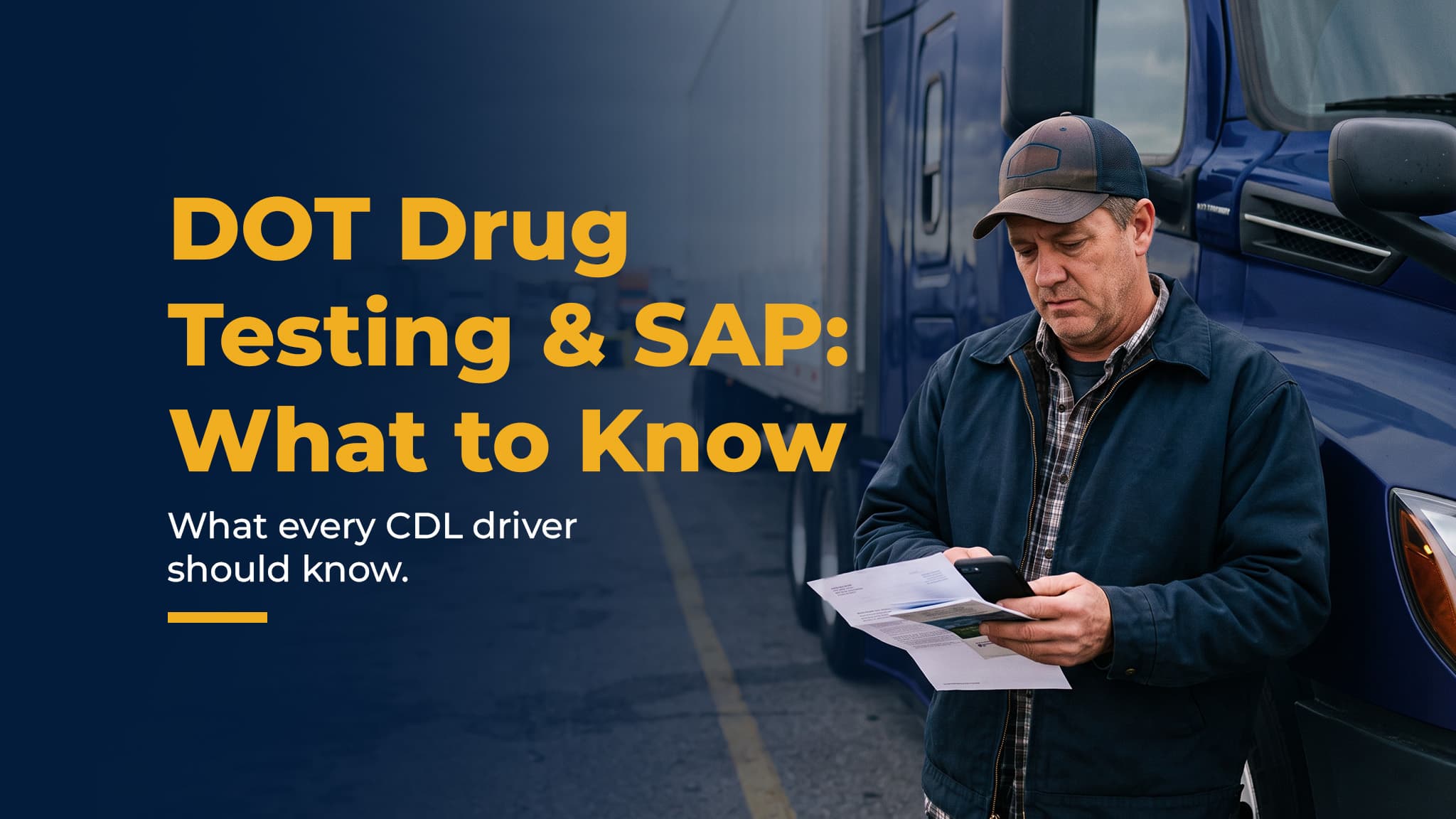
For professional CDL drivers, staying compliant with DOT drug and alcohol regulations is an important part of maintaining a successful career on the road. A failed or refused test can have serious consequences, including removal from safety-sensitive driving duties and the need to complete the Substance Abuse Professional (SAP) process before returning to DOT-regulated work.
Whether you're an experienced truck driver, recently received your CDL, or are looking for your next trucking job, understanding the DOT testing and SAP requirements can help you avoid surprises and know what steps to take if a violation occurs.
What Is DOT Drug Testing?
The U.S. Department of Transportation (DOT) requires employers in safety-sensitive transportation industries to conduct drug and alcohol testing under federal regulations.
For CDL drivers, testing is generally conducted through the employer's DOT drug and alcohol testing program. Drivers may be tested at different points during their employment, including:
- Pre-employment testing - Before performing DOT-regulated safety-sensitive duties.
- Random testing - Drivers may be selected randomly for testing throughout the year.
- Post-accident testing - Testing may be required following qualifying accidents.
- Reasonable suspicion testing - May be conducted when trained supervisors have specific, objective reasons to believe a driver may be under the influence.
- Return-to-duty testing - Required in certain situations after a DOT drug or alcohol violation.
- Follow-up testing - Additional testing may be required after successfully completing the return-to-duty process.
What Happens After a DOT Violation?
A DOT violation does not necessarily mean the end of a driver's career, but it can temporarily prevent the driver from performing DOT-regulated safety-sensitive duties.
Depending on the circumstances, a driver may need to complete the SAP process before becoming eligible to return to safety-sensitive work.
A driver should not simply move on to another trucking company and assume the violation will disappear. DOT regulations require employers to follow specific procedures when hiring drivers who have previous drug and alcohol program violations.
What Is an SAP?
SAP stands for Substance Abuse Professional.
An SAP is a qualified professional who evaluates employees who have violated DOT drug and alcohol regulations and determines what education, treatment, or other steps may be appropriate.
The SAP process generally involves:
- 1Initial SAP Evaluation
The driver meets with a qualified SAP for an evaluation. The SAP determines what type of education, counseling, or treatment may be necessary based on the circumstances.
- 2Education or Treatment
The driver completes the education or treatment recommended by the SAP.
The requirements can vary from one individual to another, so drivers should follow the specific recommendations provided by their SAP.
- 3Follow-Up SAP Evaluation
After completing the required steps, the driver returns to the SAP for a follow-up evaluation.
The SAP determines whether the driver has successfully complied with the recommended plan and whether the driver can proceed with the return-to-duty process.
- 4Return-to-Duty Testing
Before returning to DOT-regulated safety-sensitive duties, the driver must complete the required return-to-duty testing process.
The applicable test must have a negative result before the driver can resume those duties.
- 5Follow-Up Testing
After returning to safety-sensitive work, the driver may be subject to a follow-up testing plan established by the SAP. The required testing can continue for a period of time determined under DOT rules.
What Is the FMCSA Clearinghouse?
The FMCSA Drug & Alcohol Clearinghouse is a secure federal database containing information about CDL drivers' drug and alcohol program violations.
Motor carriers are required to use the Clearinghouse for certain driver queries and reporting requirements. This means a previous DOT violation can affect a driver's ability to obtain or maintain safety-sensitive employment even if the driver changes companies.
Drivers should understand their Clearinghouse status and make sure their information is accurate.
Can a Driver Return to Trucking After a DOT Violation?
In many cases, yes-but the driver must complete the required process before returning to DOT-regulated safety-sensitive duties.
The exact requirements depend on the violation and the driver's circumstances. Completing an SAP evaluation and any required education or treatment does not automatically mean the driver is immediately eligible to drive. The required return-to-duty steps must also be completed.
Why CDL Drivers Should Take DOT Compliance Seriously
A trucking career depends on safety, compliance, and professionalism. DOT drug and alcohol regulations are designed to help keep impaired drivers off the road and protect everyone who shares the highway.
For drivers, staying informed can help prevent costly mistakes and career interruptions.
If you are subject to DOT regulations, always:
- Follow your employer's drug and alcohol testing policies.
- Know when testing may be required.
- Take DOT testing seriously.
- Keep your contact and employment information up to date when required.
- Understand your Clearinghouse status.
- If you have a violation, follow the official return-to-duty process rather than assuming you can simply change employers.
What Should You Do If You Have an SAP or Clearinghouse Issue?
If you have a DOT drug or alcohol violation, the best approach is to understand your status and determine what steps are required before applying for or accepting a safety-sensitive driving position.
A qualified SAP can explain the evaluation and follow-up process applicable to your situation. Drivers can also review official FMCSA and DOT requirements to better understand their responsibilities.
At Cargo Runner Co., safety and compliance are important parts of our trucking operation. Drivers should understand their regulatory responsibilities and maintain the qualifications required for the position they are applying for.
DOT drug and alcohol testing is an important part of the trucking industry, and understanding the rules can help CDL drivers protect their careers.
Stay informed. Stay compliant. Stay focused on the road.
Cargo Runner Co
Written by the people who move America - 100+ trucks, 100 million miles, and a decade of lessons from the road.