Losing a trucking job can be frustrating, stressful, and unexpected. Whether your position ended because of company chan…
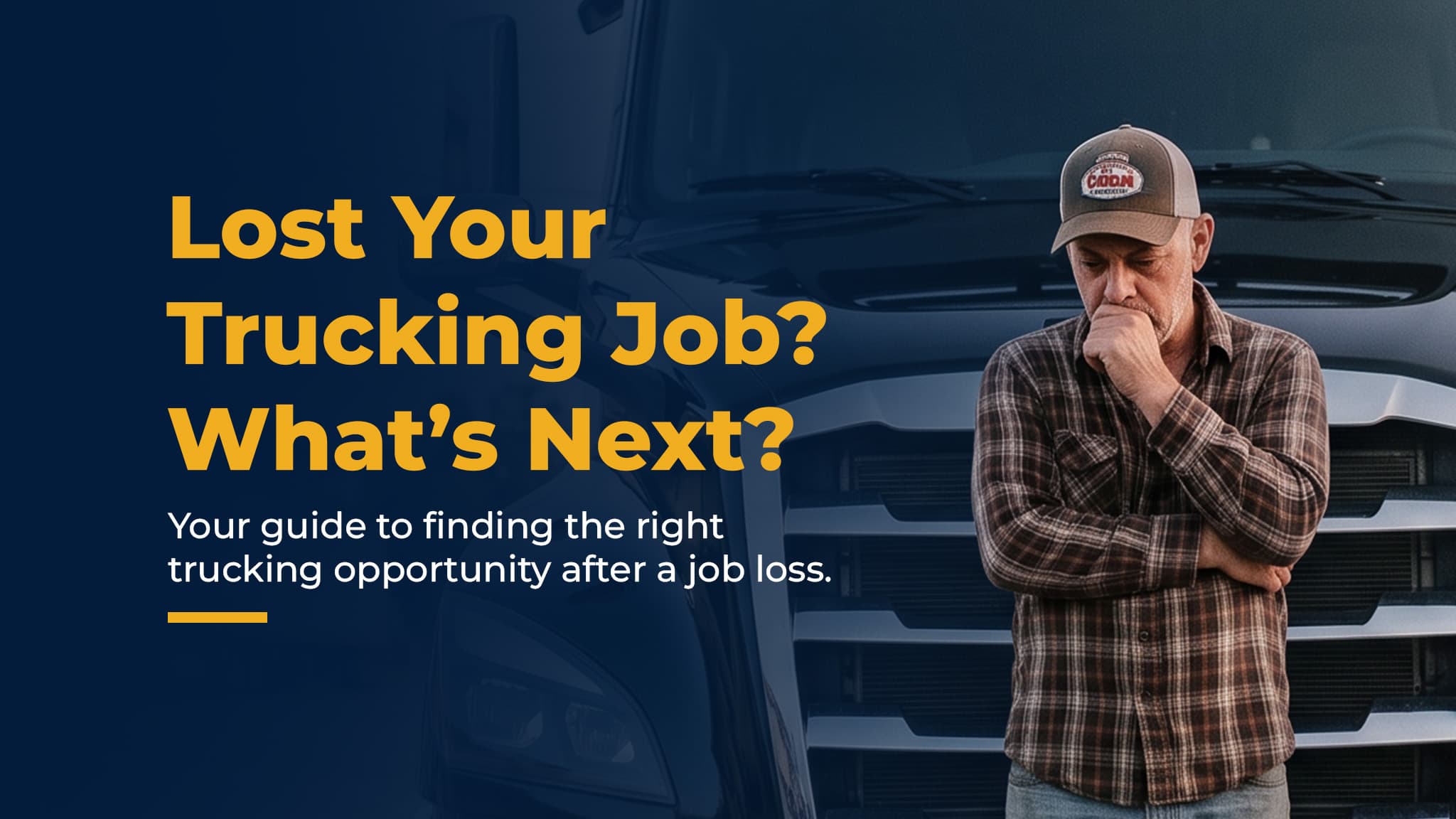
Losing a trucking job can be frustrating, stressful, and unexpected. Whether your position ended because of company changes, reduced freight, a contract ending, or circumstances outside your control, being between jobs doesn't mean your trucking career has to slow down.
Your CDL, experience, and knowledge of the road are valuable. Instead of looking backward, this can be an opportunity to find a company that offers better communication, more stability, and a stronger fit for your goals.
If you've recently lost your trucking job, here are some practical steps to help you get back on the road.
Take a Step Back and Understand What Happened
Before immediately accepting the first job you find, take a moment to understand why your previous position ended.
Was it related to the company? Freight availability? Equipment? Pay? Scheduling? Communication? Or was it simply time for a change?
Understanding what didn't work in your previous position can help you avoid repeating the same situation.
Make a short list of what you liked about your previous job and what you would change. Maybe you want more consistent miles, better communication with dispatch, different freight, a newer truck, or simply a company where drivers feel respected.
Knowing what you want makes the next job search much easier.
Make Sure Your CDL and Documents Are Ready
Before applying, make sure your important documents and information are up to date.
Depending on the position you're applying for, you may need:
- A valid CDL
- Medical certification
- Recent employment history
- Driving record information
- Previous employer information
- Verification of your experience
- Information about your trailer and freight experience
Having everything ready can make the recruiting process faster and help you respond quickly when a good opportunity becomes available.
Look Beyond the Pay Per Mile
Pay is important, but it's not the only thing that determines whether a trucking job is a good fit.
When comparing companies, look at the complete compensation package and the way the company operates.
Ask questions such as:
How are miles calculated?
- Are all miles paid?
- How is detention handled?
- Are layovers paid?
- Are extra stops compensated?
- How often are drivers paid?
- What kind of freight will I haul?
- What lanes or regions do drivers typically run?
- Is dispatch forced or flexible?
- What equipment will I operate?
- What happens when the truck needs maintenance?
- Who can I contact after hours?
A job that looks great in an advertisement may feel very different once you're behind the wheel. Don't be afraid to ask questions before making your decision.
Find a Company That Matches Your Experience
Not every trucking job is the same.
Your experience may determine which opportunities make the most sense for you. A driver with extensive dry van experience may be looking for a completely different position than a driver who specializes in reefer or flatbed freight.
Think about the type of driving you actually enjoy.
- Dry Van
Dry van freight can provide opportunities for drivers who prefer general freight and a wide variety of destinations.
- Reefer
Reefer operations can be a good fit for drivers who are comfortable handling temperature-controlled freight and time-sensitive deliveries.
- Flatbed
Flatbed trucking offers a different style of driving and securement work and can be a strong option for experienced drivers who enjoy the challenges of open-deck freight.
The right equipment and freight type can make a major difference in your day-to-day experience.
Research the Company Before You Commit
Don't choose your next trucking company based on a single advertisement.
Look at the company's website, social media, reviews, job postings, equipment, and driver policies. Pay attention to how the company communicates with drivers and whether the information they provide is clear and consistent.
A good recruiter should be willing to answer your questions - not pressure you into making a decision you aren't comfortable with.
Your next trucking job is a significant decision. Take the time to understand what you're signing up for.
Don't Let a Job Loss Define Your Career
One difficult job experience doesn't erase the skills you've built over the years.
As a professional truck driver, you've developed skills that go far beyond simply driving a truck. You understand schedules, weather, traffic, equipment, customers, loading procedures, safety, regulations, and the responsibility that comes with moving freight across the country.
Those skills have value.
The trucking industry continues to depend on experienced professional drivers to keep freight moving. Being temporarily out of work doesn't mean you're starting over - it means you're looking for your next opportunity.
Be Honest About Your Driving History
When applying for a new trucking position, honesty is important.
Companies will typically review your driving history and employment background as part of the hiring process. Trying to hide information can create bigger problems later.
Be upfront about your experience, qualifications, and driving history. If there is something in your record that you are concerned about, ask the recruiter whether it affects your eligibility before moving forward.
A straightforward conversation early in the process can save everyone time.
Use Your Network
Your next trucking job may come from someone you already know.
Talk to former coworkers, drivers, dispatchers, mechanics, friends in the industry, and other professional contacts. Experienced drivers often hear about opportunities through other drivers before those positions become widely advertised.
If you had a good relationship with people at your previous company, stay in touch.
The trucking industry is a large network, but it's also a relatively connected one. A recommendation from someone who knows your work can open doors.
Think About What You Want Long-Term
A job search is also a chance to think about where you want your career to go.
Are you looking for a company driving position? Are you interested in becoming an owner-operator? Would a lease-purchase program fit your goals? Do you want to specialize in a certain type of freight?
You don't necessarily need to have the entire future planned out.
Start with the next step.
The best opportunity isn't always the one with the biggest number in the advertisement. It may be the company that provides the right combination of freight, equipment, support, communication, and earning potential for your situation.
Get Back on the Road With Confidence
Losing a trucking job can feel like a setback, but it can also be the beginning of something better.
Use the experience to identify what you want from your next company. Do your research. Ask questions. Compare opportunities. And don't settle for a position that doesn't match your goals simply because you want to get back to work quickly.
At Cargo Runner Co., we understand that professional drivers are looking for more than just a seat behind the wheel. The relationship between a driver and a trucking company matters.
If you're ready for your next move, explore the opportunities available at Cargo Runner Co. and find out whether we're the right fit for your trucking career.
Your Next Move Starts Here
A lost trucking job doesn't have to mean the end of your momentum.
Learn from the past. Know what you want. Ask the right questions. Then get back on the road.
Your next opportunity could be the one that takes your career further.
Cargo Runner Co
Written by the people who move America - 100+ trucks, 100 million miles, and a decade of lessons from the road.